
Free GD&T Training Blog

Get straight answers, useful tips, and clear explanations on our blog. It’s almost like getting GD&T training for free.

Why Use GD&T?

by Crystal Bemis on April 27, 2022. (sticky)

We get a lot of questions from students asking why they would want to use Geometric Dimensioning and Tolerancing (GD&T) over coordinate dimensions. Some believe that using GD&T will result in tighter tolerances and increase...
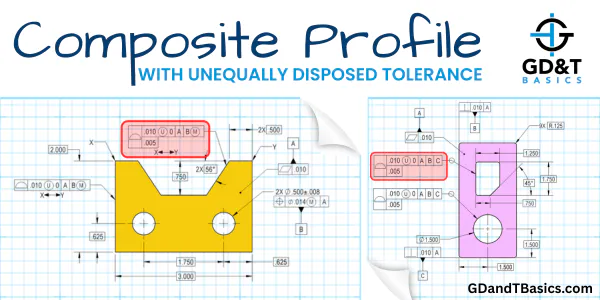
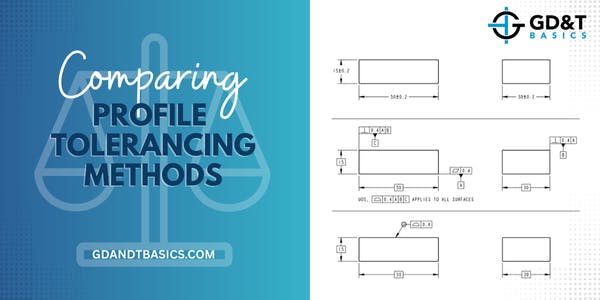
Composite Profile with Unequally Disposed Tolerance

by Crystal Bemis on March 30, 2026.
In this Question Line video, Jason walks through two examples of composite profile with unequally disposed tolerance zones, discussing why and when they should be used and explaining how the zones interact to control location, orientation, and form.

Position vs Runout

by Crystal Bemis on March 23, 2026.

Position vs runout explained: Learn how each tolerance controls coaxial features, how they’re measured, and what they actually limit.

How to Report Composite Position

by Crystal Bemis on March 2, 2026.

In this Question Line video, Jason explains how to report composite position for a pattern of holes, focusing on the challenges and methods of reporting results for the lower framework (FRTZF).

The LMC Modifier

by Crystal Bemis on February 9, 2026.

In this Question Line video, Jason explains how the LMC modifier impacts position tolerance, minimum wall thickness, and assembly clearance.

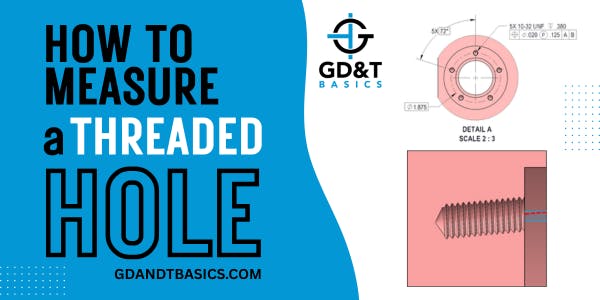
How to Measure a Threaded Hole

by Crystal Bemis on October 20, 2025.

In this Question Line video, learn how threaded hole location gauges are used to inspect the pitch cylinder axis and why the projected tolerance zone modifier is often the most functional spec on an internal threaded feature.

Flatness or Parallelism

by Crystal Bemis on September 8, 2025.

In this Question Line video, Jason reviews a submitted drawing, explaining the difference between flatness and parallelism, and gives options on how to tolerance the drawing based on what is critical to the design.

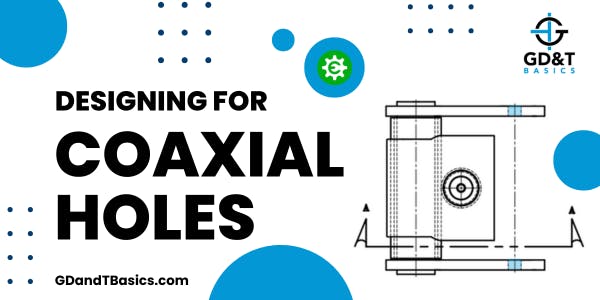
Designing for Coaxial Holes

by Crystal Bemis on July 28, 2025.

In this Question Line video, Jason reviews a submitted weldment drawing and demonstrates how to calculate the position tolerance needed for a zero-clearance fit in the worst-case assembly scenario, ensuring that the shaft can pass through two coaxial holes.

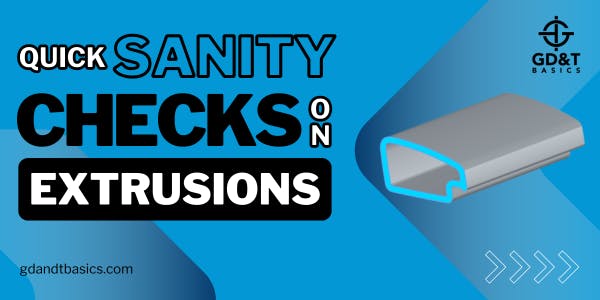
Quick Sanity Checks on Extrusions

by Crystal Bemis on July 21, 2025.

In this Question Line video, Jason shares some quick sanity checks that can help identify manufacturing issues for an extruded part being controlled by profile of a line tolerances.

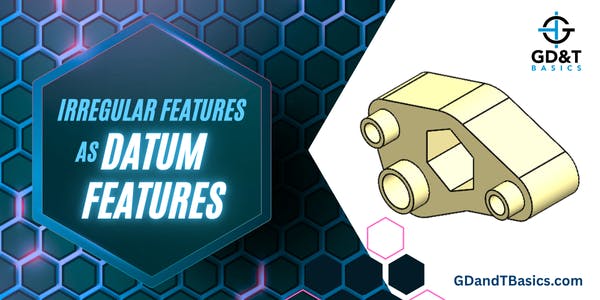
Irregular Features as Datum Features

by Crystal Bemis on July 7, 2025.

In this Question Line video, Jason explains how an irregular feature like a hexagon can serve as a primary datum feature and discusses how this part could be inspected – touching on gage design for manual inspection and point cloud analysis using a CMM.

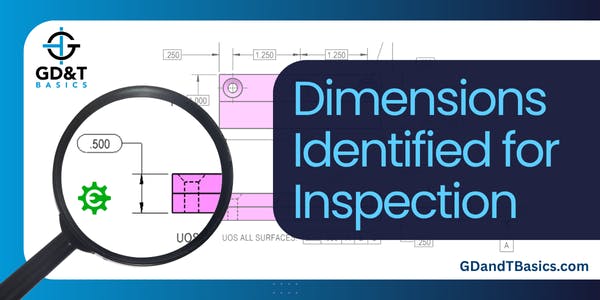
Dimensions Identified for Inspection

by Crystal Bemis on June 30, 2025.

What does it mean when a dimension is circled on a drawing—and how does it impact manufacturing? In this video, Jason explains the informal use of ovals as quality control symbols and what it means for how parts are made and inspected.

Choosing the Right GD&T Tolerances

by Crystal Bemis on June 9, 2025.

In this Question Line video, Jason reviews a submitted drawing that attempts to locate two parts relative to each other and explains how to choose the correct GD&T tolerances to support the intended function.

Separate Requirements at MMB

by Crystal Bemis on June 2, 2025.

In this video, Jason explains when simultaneous requirements apply and how the “separate requirements” note affects inspection, sharing examples that illustrate reasons for using each approach.

Rule #1 and Title Block Tolerances

by Crystal Bemis on March 3, 2025.

In this Question Line video, Jason answers a student's question regarding whether a default angular tolerance (found in the Title Block) must be taken into account in addition to the part meeting Rule #1 for it to pass inspection.

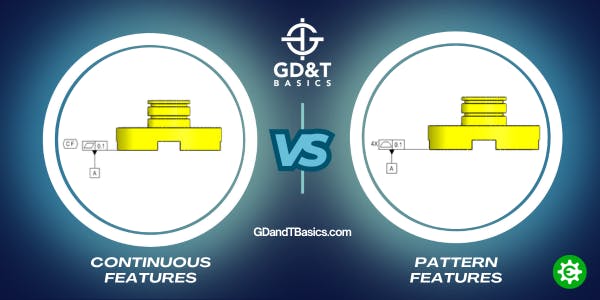
Continuous Features vs Pattern Features

by Crystal Bemis on February 24, 2025.

In this Question Line video, Jason compares two similar part drawings - one containing the Continuous Feature symbol and the other having a simultaneous requirement for a pattern of features - and discusses how the inspected values would be reported.